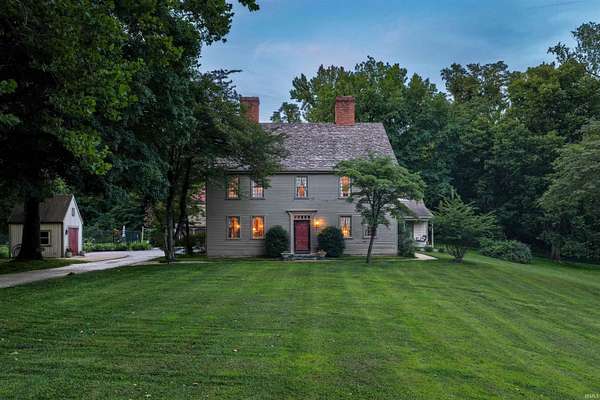
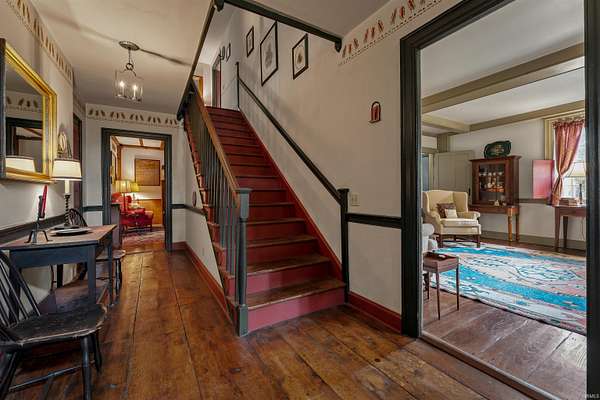
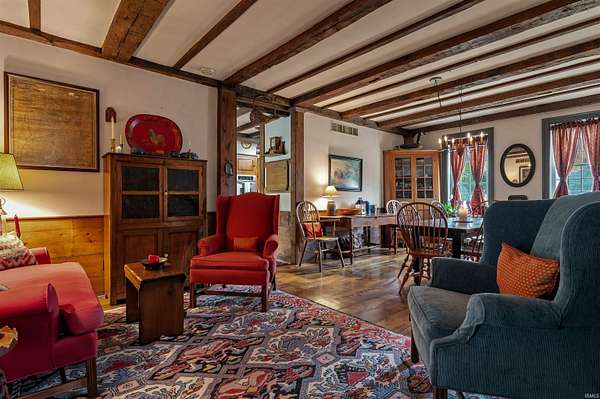
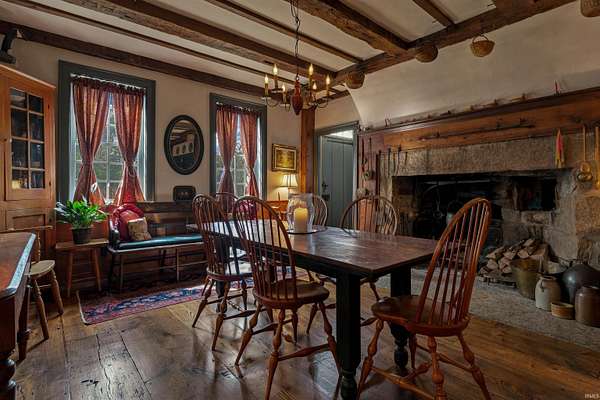
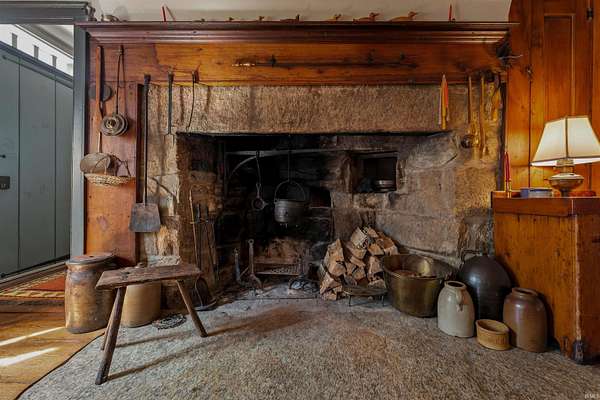
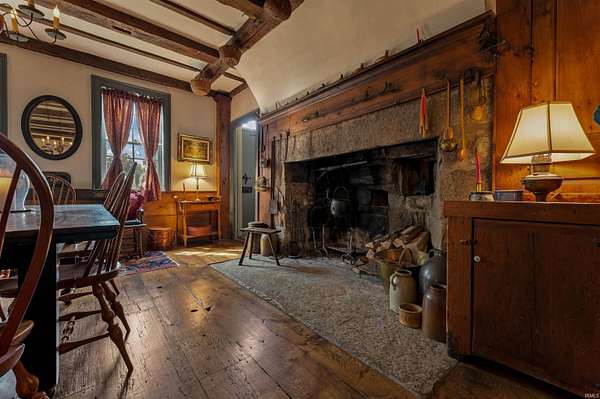
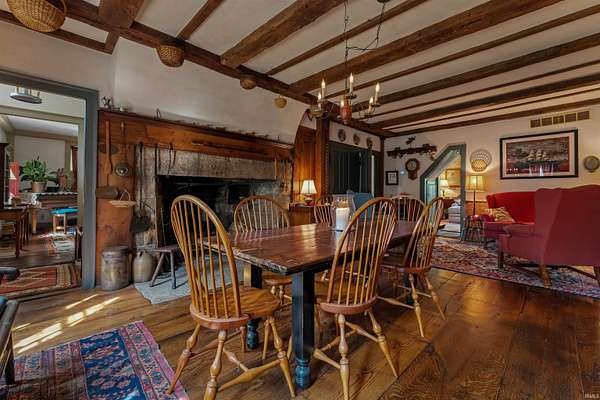
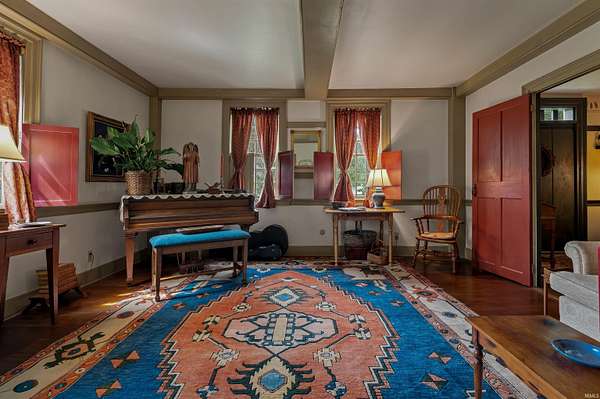
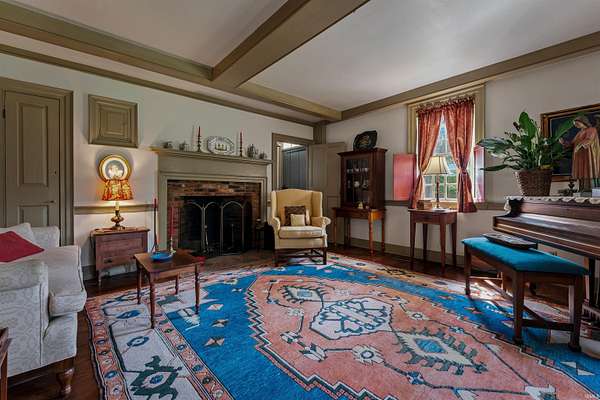
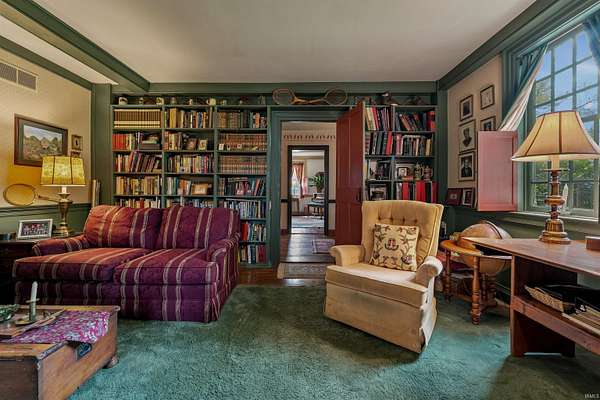
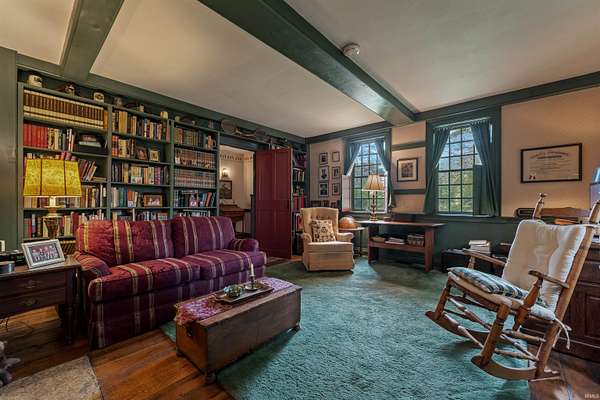
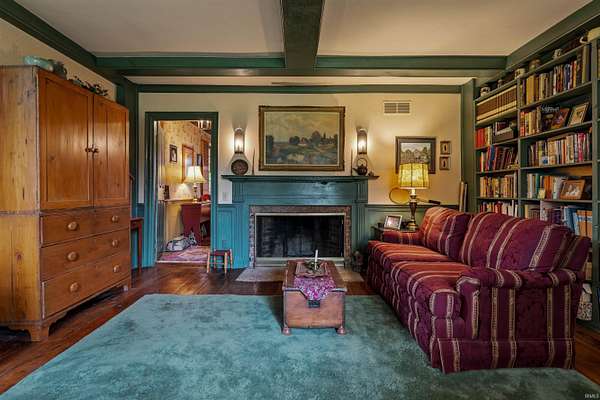
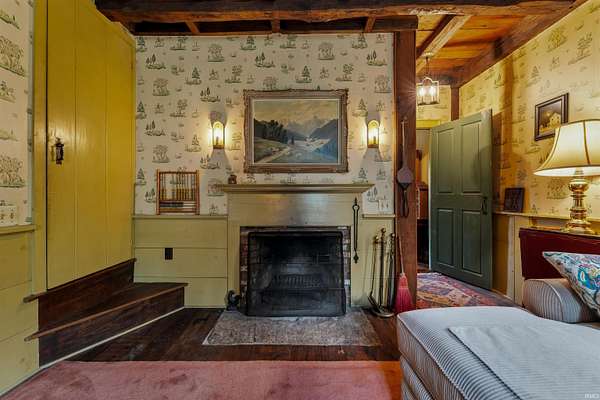
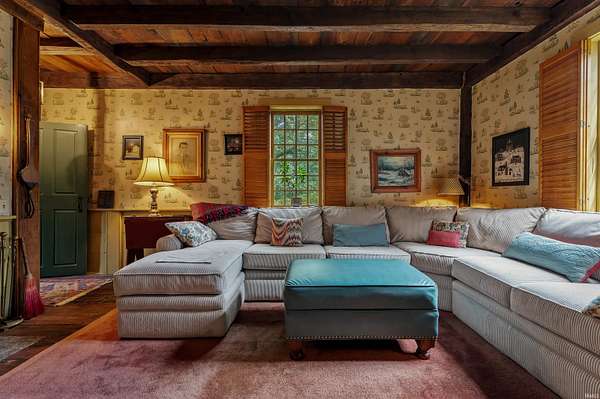
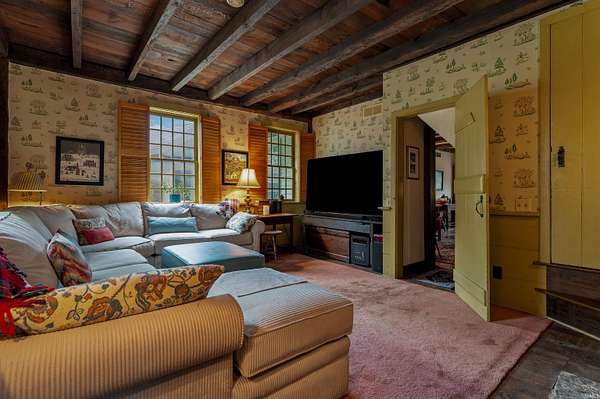
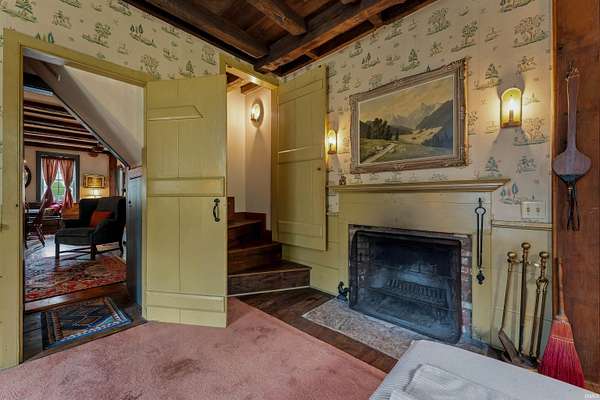
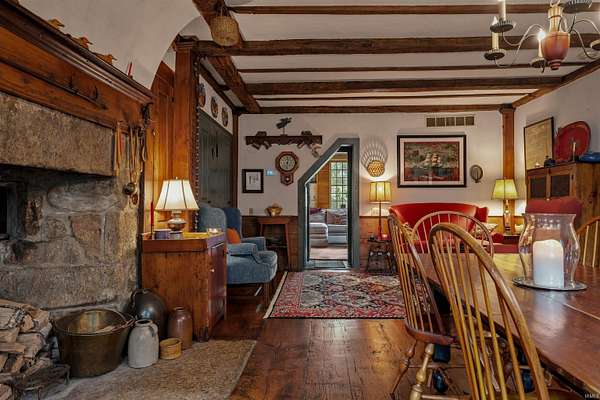
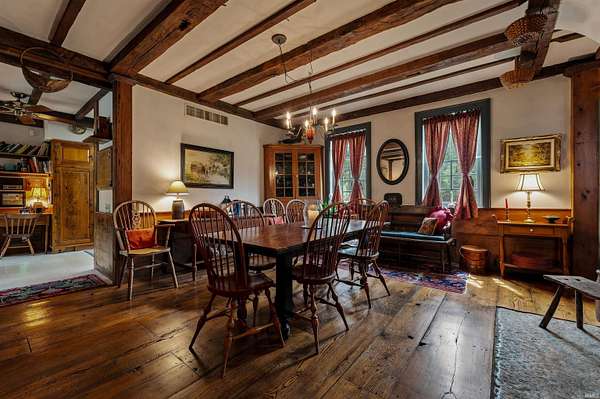
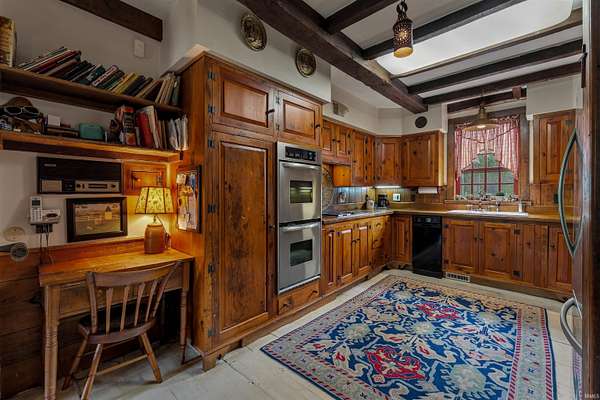
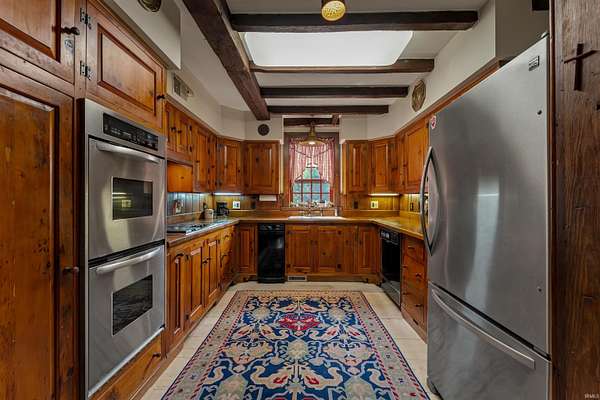
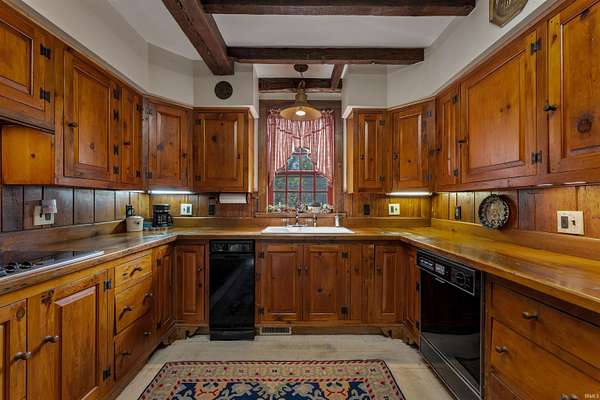
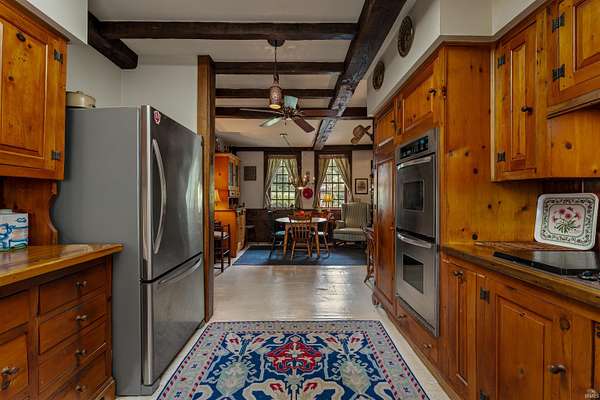
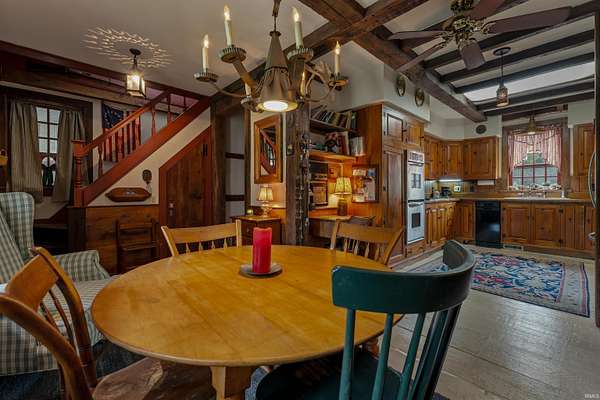
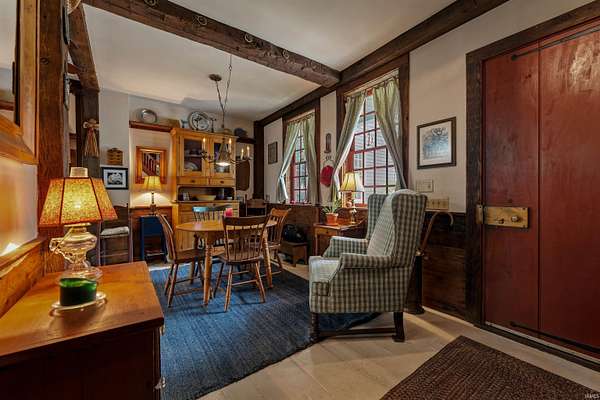
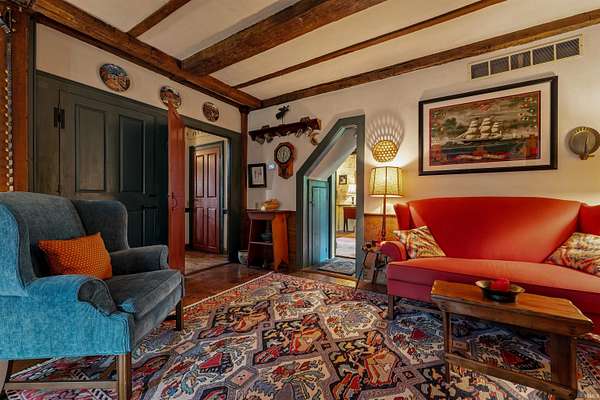
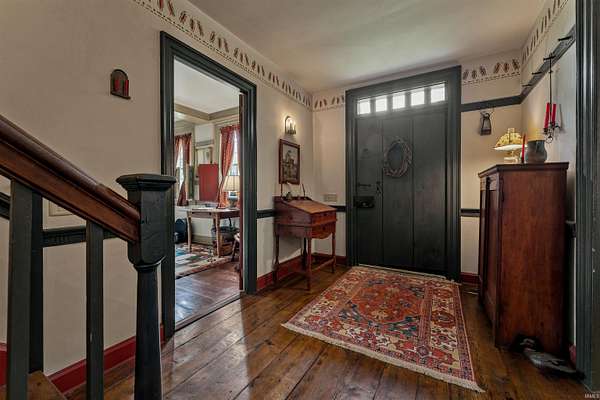
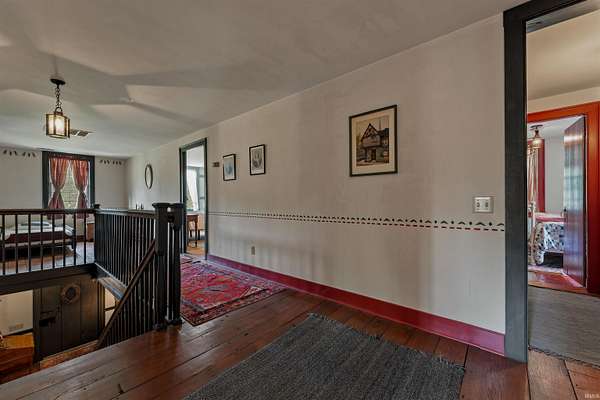
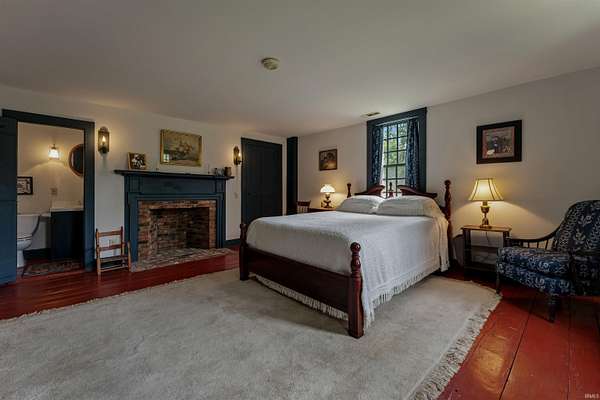
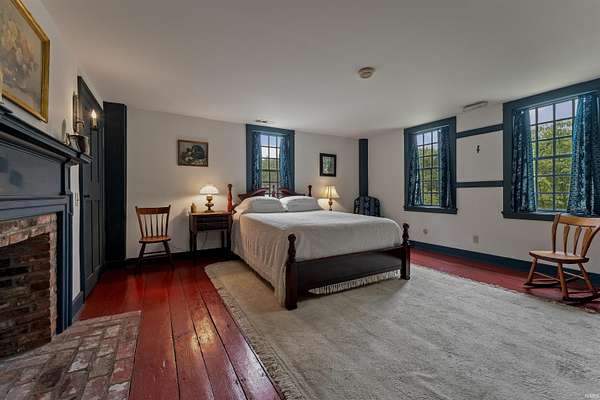
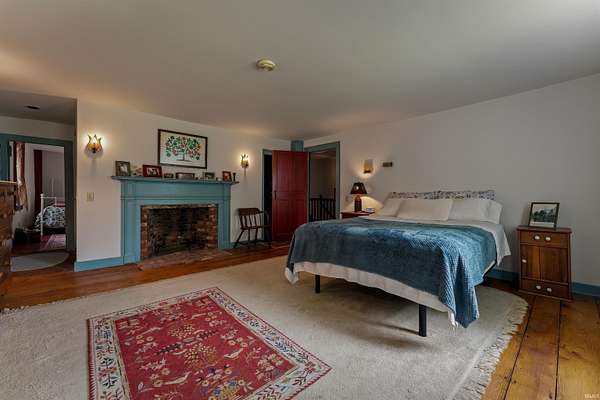
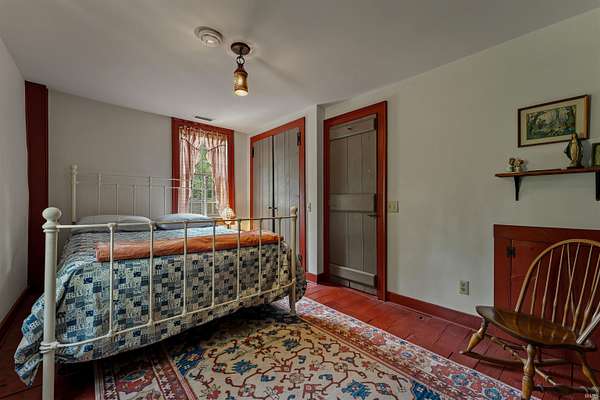
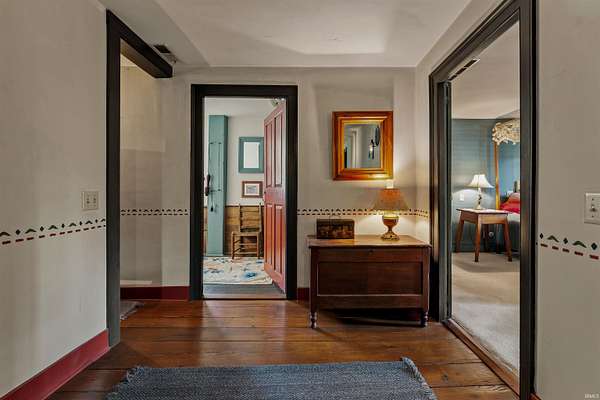
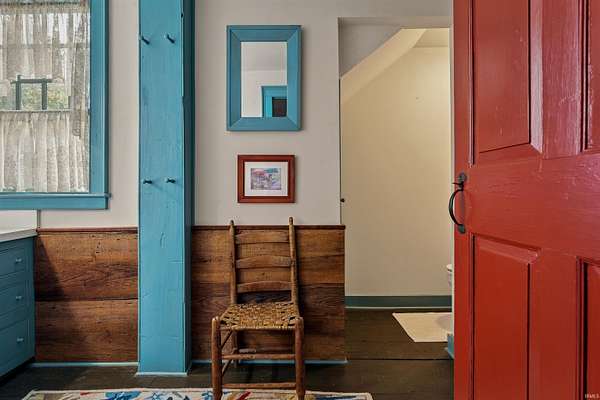
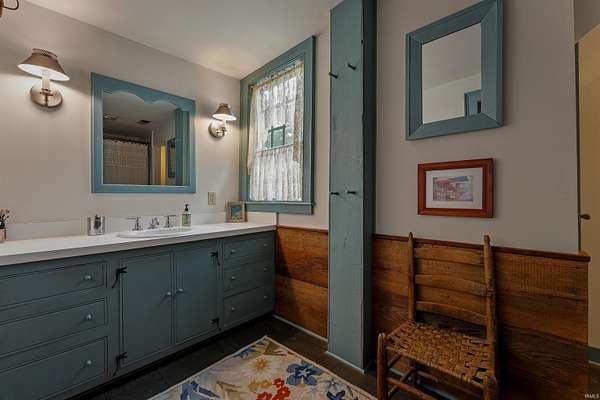
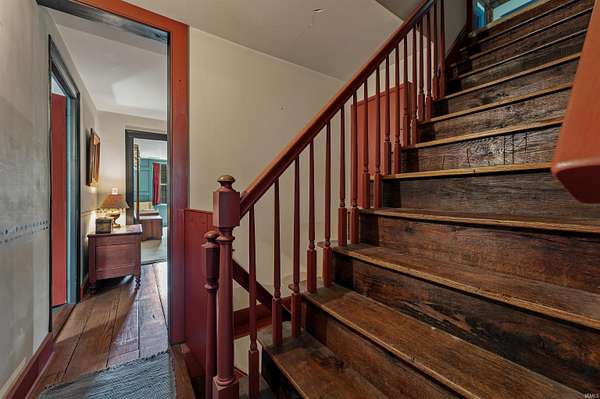
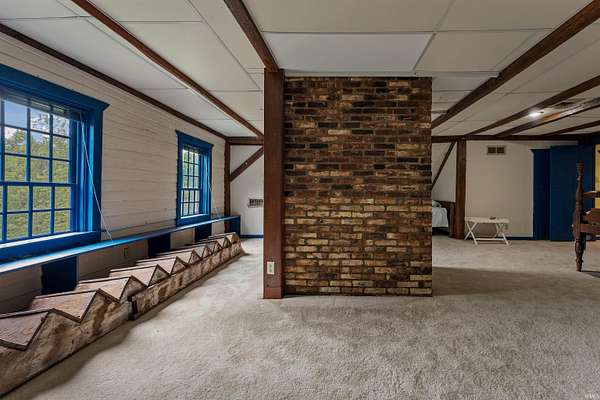
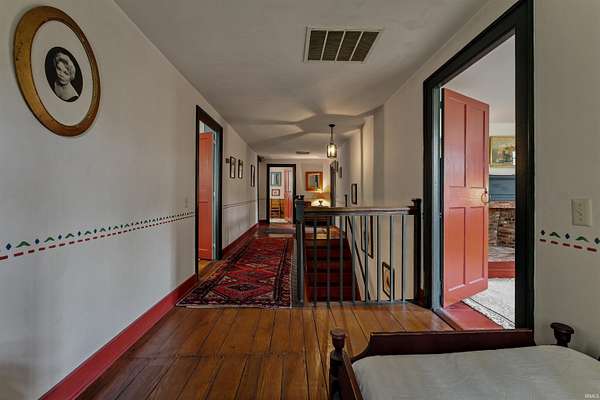
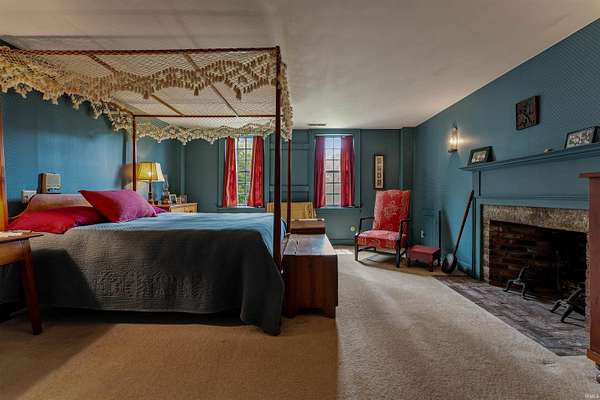
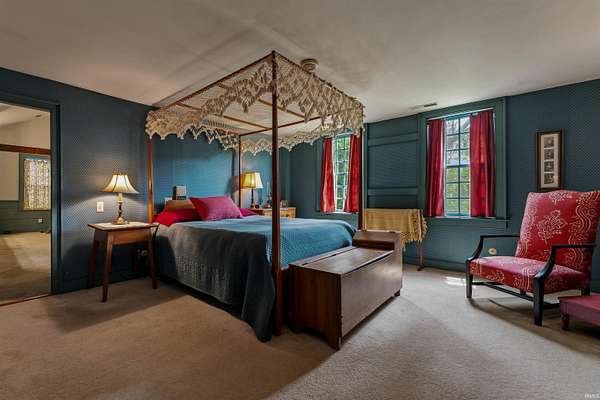
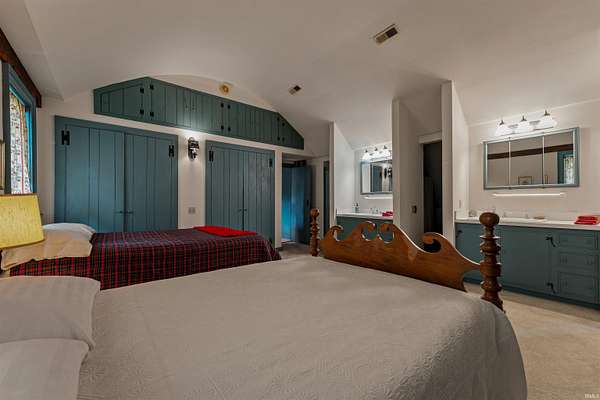
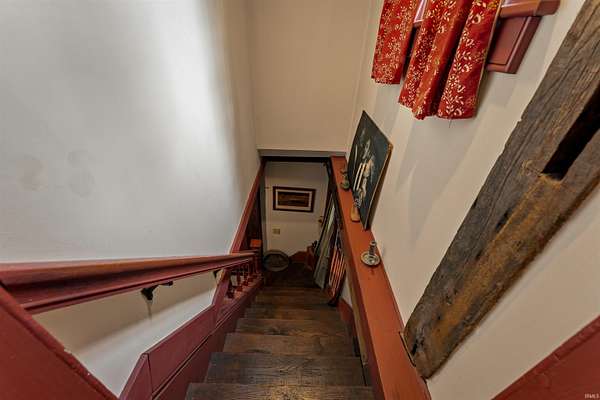
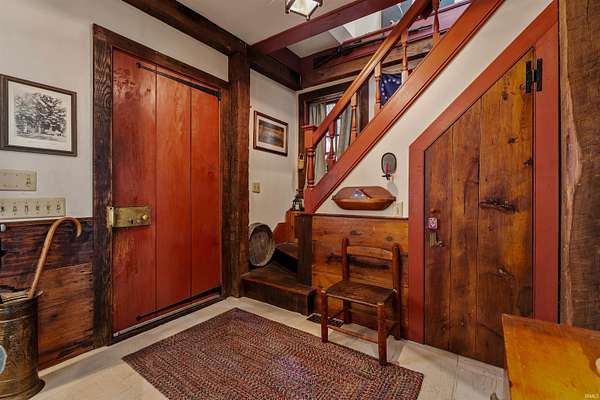
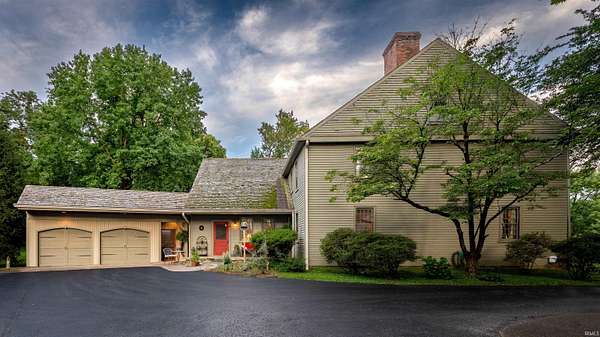
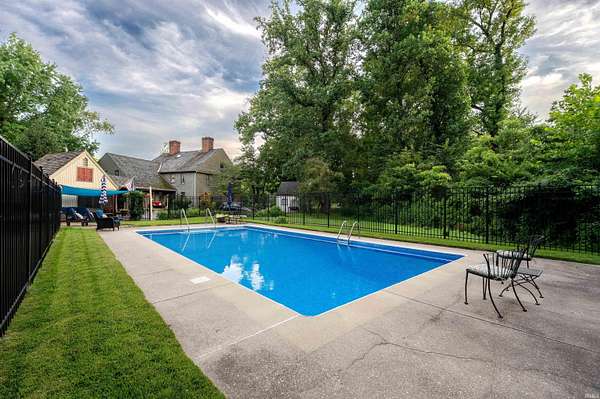
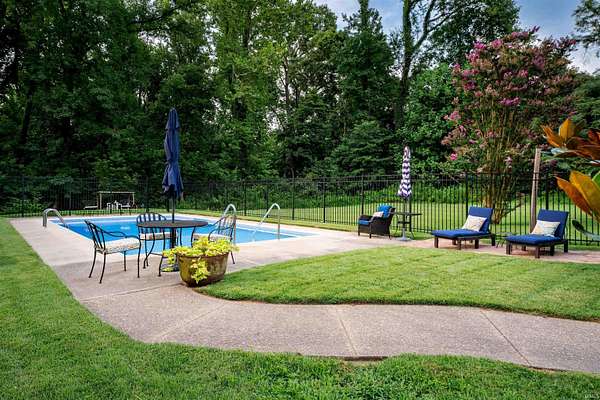
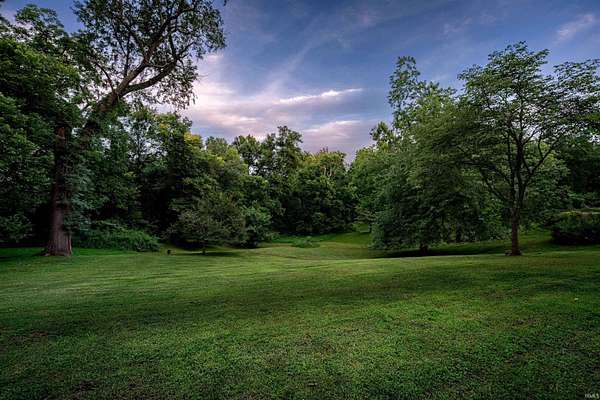
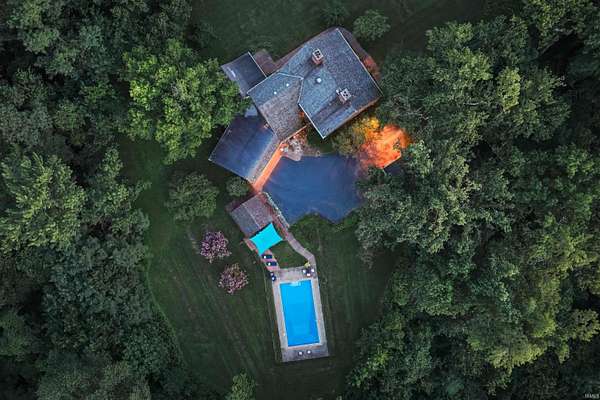
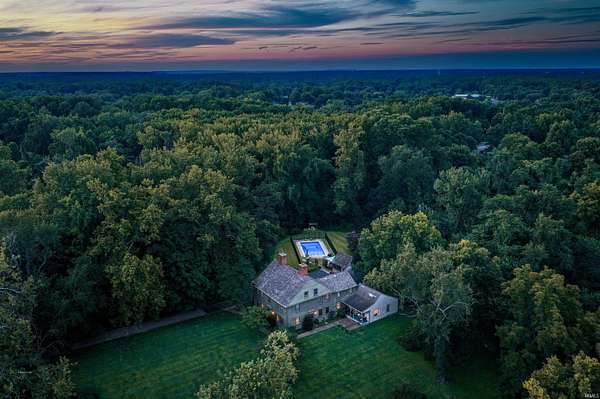
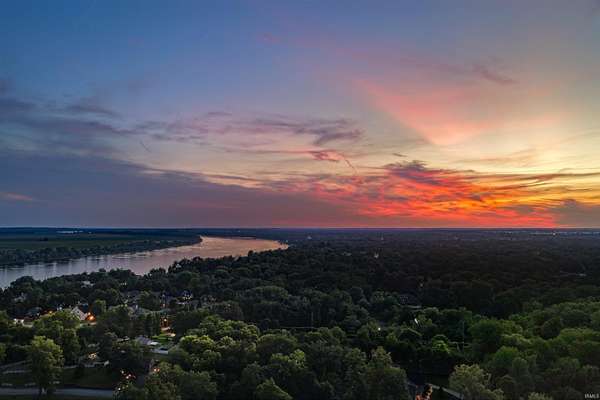
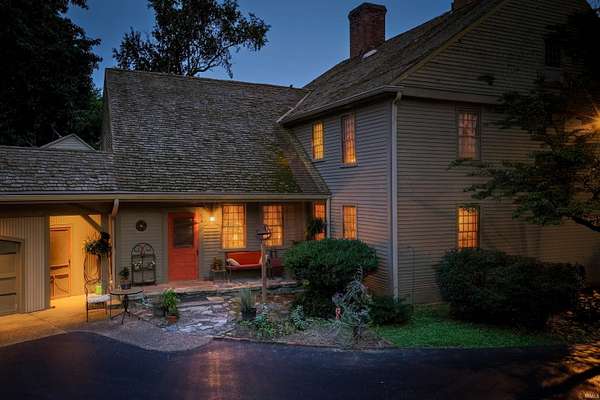
Approaching Sycamore Hollow from the drive, the stance and symmetry of Colonial architecture immediately commands attention. Step through the front door and Indiana disappears. Hand-hewn timbers, broad floorboards, seven fireplaces, hand-forged hardware, period glass, and centuries-old masonry transport you to Colonial Williamsburg, to a National Park site. The Keeping Room centers on a massive fireplace, enormous stone hearth, and a mantel cracked in a Nor'easter, complete with cast-iron cooking crane, in a room organized around fire, food, and life. The home and its journey to three rolling acres near historic Newburgh are nearly as extraordinary. The principal front portion dates to 1759, with the rear section predating it as a Quaker Meeting House on Black Hill near Plainfield, Connecticut. In 1830 it became the Friends Boarding School; accounts identify Susan B. Anthony among its students, with reports of meetings between the pupils of Black Hill and Prudence Crandall's legendary school nearby. Threatened with destruction by 1976, the house became the subject of a Herculean preservation undertaking. Photographed, measured, individual components labeled, masonry dismantled, the centuries-old timber frame was taken apart piece by piece and loaded into railroad cars for the 900-mile journey to Indiana. Here it was reconstructed with astonishing precision on a steel-reinforced 20th-century foundation, integrating modern systems without sacrificing its age. Nearly fifty years later, hand-hewn timbers remain the true bones of the house while adjacent lath-and-plaster meets them with remarkable integrity. Exterior siding survives inside the third floor; historic bricks were reassembled individually, some bearing schoolchildren's signatures; Williamsburg reproduction wallpapers and restrained millwork complete the experience in warmth. A respectful 1990s main-level apartment extends the philosophy, offering a true main-floor primary suite, guest quarters, or intergenerational living. Outside, mature grounds and pool complete three private acres minutes from historic Newburgh and the Ohio River. Even the address, 1759, was deliberately chosen to carry the date of the principal house into its Indiana life. For those who know what they are looking at, the achievement is difficult to overstate: an irreplaceable national treasure predating the founding of America, saved one numbered piece at a time, masterfully given another life.